A scanner finding is a lead, not a verdict
Suppose a dynamic scanner reports an unauthenticated endpoint that accepts a user-controlled URL. The result deserves investigation, but the alert alone does not tell you whether the service makes an outbound request, follows redirects, reaches private address space, or returns anything useful to an attacker. Those details determine whether the issue is harmless input, limited server-side request forgery, or a path into sensitive infrastructure.
Now consider the opposite case: the scanner returns no alert. That still does not establish that the workflow is safe. The vulnerable request may require a valid account, a resource created in an earlier step, an unusual content type, or a chain across two endpoints. Coverage and proof are separate properties.
This is the useful distinction between vulnerability scanning and penetration testing. Scanning finds conditions worth examining across a large surface. Penetration testing follows attacker-controlled paths far enough to establish what can actually happen. Neither label guarantees quality, and neither function makes the other obsolete.

First, be precise about what counts as scanning
"Vulnerability scanner" covers several different jobs. Software composition analysis maps dependencies to known advisories. Static analysis searches source or compiled artifacts for risky data flows and coding patterns. Network scanners identify exposed services and known product weaknesses. Dynamic application scanners send requests to a running target and look for behavior associated with common vulnerability classes.
These tools can do more than simple signature matching. A good dynamic scanner may confirm reflected payloads or retrieve a known sensitive path. A static analyzer may trace untrusted input to a dangerous sink with high confidence. The important limitation is not that scanners never validate anything. It is that their primary operating model favors repeatable coverage and bounded checks over sustained adversarial investigation.
That tradeoff is valuable. Security teams need continuously refreshed inventories, dependency visibility, configuration checks, and early feedback in development. Using a penetration test for every one of those tasks would be slow, expensive, and unnecessary.
Penetration testing changes the unit of analysis
A scanner usually evaluates an individual component, pattern, or response. A penetration test evaluates an attack path.
The path may start with a low-severity information leak, continue through weak authorization, and end with access to another tenant's data. Each observation can look modest in isolation. Together they produce an outcome the business cares about. A competent tester keeps state, adapts to the application's responses, changes hypotheses, and knows when the evidence is insufficient.
The resulting finding should describe more than a weakness category. It should identify the affected asset, attacker position, required privileges, sequence of actions, observed impact, and constraints of the test. Reproduction evidence allows engineering to distinguish a demonstrated failure from a plausible concern.
That does not make every exploited issue critical. A reliable proof may demonstrate limited impact. It does make the prioritization discussion more honest because reachability and consequence are no longer assumptions hidden behind a severity score.
AI changes the frequency of adversarial testing, not its standard of proof
An autonomous pentesting agent can explore an authorized application, inspect responses, form hypotheses, operate tools, and adapt its next action without a human scripting every request. That makes it possible to run adversarial tests more often and across more releases than a human-only engagement model usually permits.
The standard for a finding should not fall because an agent produced it. If anything, autonomy makes traceability more important. A useful system must preserve what the agent attempted, which target and identity it used, what evidence it observed, and why the result supports the reported impact. An opaque conclusion from an AI system is still an opaque conclusion.
Scope control matters for the same reason. The system should operate only against authorized assets, respect explicit boundaries, isolate its execution, and make its actions reviewable. "The model decided to try it" is not a substitute for authorization or safe test design.
Evidence quality is a better metric than finding volume
Counting findings rewards noisy behavior. Ten speculative alerts do not necessarily create more risk reduction than one verified authorization failure with a clear reproduction path.
When we review a finding, we look for six properties:
- Identity: the exact application, endpoint, repository, or service affected.
- Preconditions: the network position, account state, privileges, and data required.
- Action: the requests or operations that exercised the weakness.
- Observation: the response and resulting state change, not only the tool's interpretation.
- Impact: what access or capability the attacker gained under the tested conditions.
- Limits: what was not tested, what depended on environment state, and what remains inferred.
This evidence is useful even when the outcome is less severe than expected. It lets teams remove false assumptions, reproduce the result, choose the right owner, and define what a successful fix must prevent.
Keep scanners as the default for broad, mechanical questions
Vulnerability scanning should remain the workhorse where the question can be answered consistently with a bounded rule. Examples include identifying a newly disclosed dependency across hundreds of repositories, detecting an exposed administrative service, checking baseline TLS configuration, or finding a prohibited package version before release.
Scanners also provide negative-space visibility that penetration tests do not. They can show which portion of an estate was inventoried, which checks ran, and where a policy violation recurs. A pentest samples behavior within a scope; it should not be presented as exhaustive coverage of every asset, route, or vulnerability class.
The right response to scanner noise is better asset data, tuning, suppression discipline, and validation workflows. Replacing the scanner with a more expensive test does not solve weak security operations.
Use penetration testing where context controls the answer
Adversarial testing earns its place when exploitation depends on state, identity, sequencing, or interaction between controls. That commonly includes broken object-level authorization, privilege transitions, business-logic abuse, multi-step account recovery, trust-boundary failures, and chains that cross application features.
It is also appropriate when the organization needs to know whether a high-consequence scanner result is reachable in its environment, or whether a deployed security fix stops the original attack. In those cases, the value comes from resolving uncertainty with evidence, not from generating another category label.
Risk should determine depth. An internet-facing administrative path protecting production access deserves more effort than an isolated development service with synthetic data. Mature programs do not apply the same testing intensity everywhere; they use architecture, data sensitivity, exposure, and change history to decide where proof matters most.
Design the handoff between coverage and proof
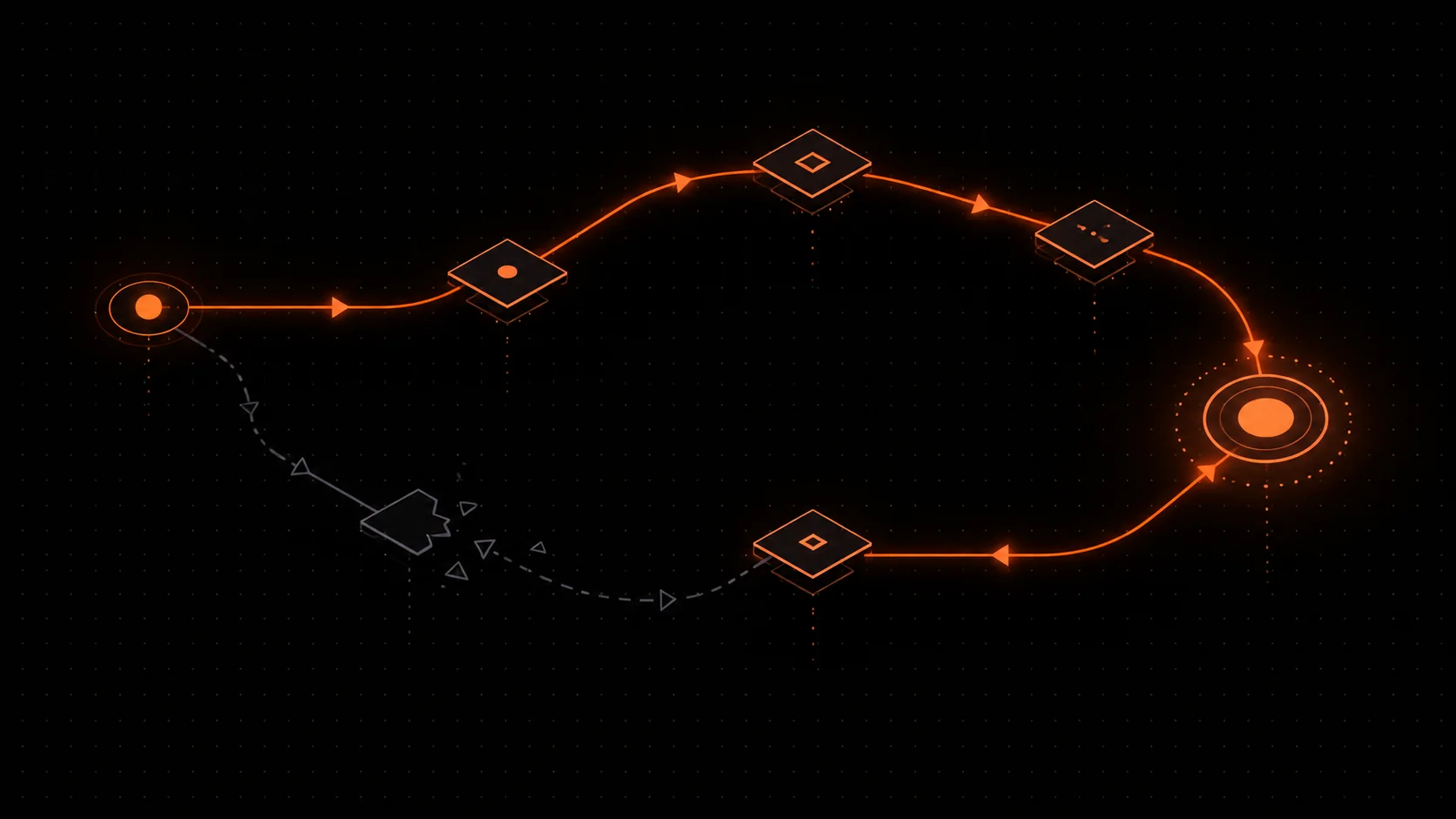
The two approaches work best as a pipeline with explicit outputs.
| Stage | Primary question | Typical evidence |
|---|---|---|
| Discover | What changed or looks unsafe across the estate? | Asset, component, rule, location, and raw observation |
| Investigate | Is the signal reachable and credible in this context? | Preconditions, control behavior, and eliminated hypotheses |
| Prove | Can an authorized test produce security impact? | Reproducible attack path, observed result, and limitations |
| Remediate | Which control should change, and who owns it? | Root cause, affected boundary, patch, and regression coverage |
| Validate | Does the deployed fix stop the demonstrated path? | Targeted retest result tied to the original finding |
Not every scanner alert needs to reach the prove stage. Policy violations and known vulnerable dependencies can justify remediation without exploitation. Likewise, pentesters should not wait for a scanner to identify every target; threat modeling and application behavior often reveal paths that signatures will not.
Where Vulnix fits
Vulnix focuses on the adversarial portion of that workflow. It runs scoped tests against authorized targets, with blackbox testing for live web applications and APIs and whitebox testing for connected repositories. Findings retain the evidence and agent trace needed to understand how the result was reached, then feed reporting and remediation work.
The intent is not to turn an alert queue into a larger alert queue. It is to make attacker-style investigation repeatable while preserving a record that engineers can inspect. When a finding is remediated, the same evidence chain supports a targeted check of whether the deployed control now blocks the original path.
You can read more about the testing modes in blackbox and whitebox testing and the resulting evidence in findings and reports.
Choose the tool by the decision you need to make
Use scanning when you need broad and repeatable answers: which assets are exposed, which dependencies are affected, which configurations drifted, and where a known pattern appears. Use penetration testing when the decision depends on attacker behavior: whether a path is reachable, how controls interact, what impact can be demonstrated, and whether remediation holds.
The strongest security program is not the one with the longest findings list. It is the one that knows which signals require action, which risks have been demonstrated, and which fixes have been tested against the attacks they were meant to stop.